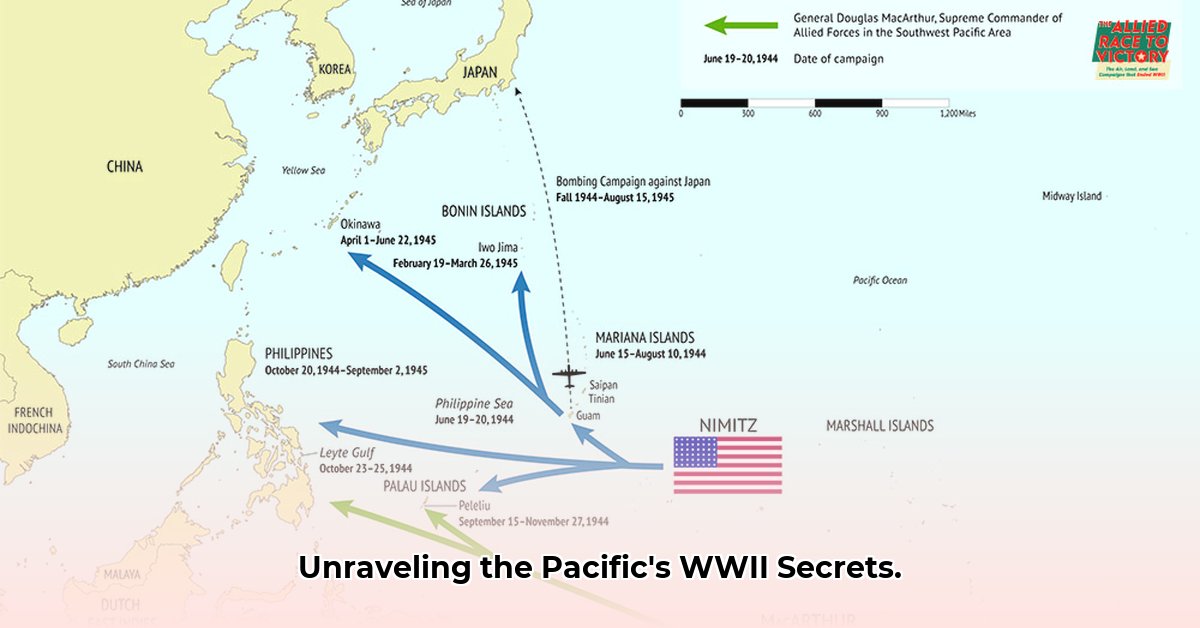
The Allied victory in the Pacific Theater of World War II wasn't a singular event, but a culmination of strategic brilliance, tactical prowess, and unwavering determination across a vast ocean. This victory hinged on a complex interplay of strategies, technological advancements, and the human cost of war. Understanding this multifaceted campaign requires examining its key components. For a visual representation of the campaign, check out this Pacific War map.
Island Hopping: A Gradual Conquest
The Allies eschewed a direct frontal assault on the Japanese home islands, opting instead for the "island-hopping" strategy. This involved selectively targeting strategically vital islands—those possessing airfields, harbors, or other critical resources—while bypassing less significant ones. This approach, likened to stepping stones across a vast lake, allowed for a gradual erosion of Japanese power, bringing Allied forces incrementally closer to the Japanese mainland. While successful overall, this strategy was far from seamless. Certain islands, like Iwo Jima and Okinawa, proved unexpectedly arduous to conquer, resulting in substantial Allied casualties. However, the overall effectiveness of the island-hopping campaign remains undeniable. Did the Allies make the right choice in prioritizing strategic targets despite the challenges? Historians continue to debate the optimal balance between speed and security.
Naval and Air Superiority: A Crucial Advantage
Control of the Pacific's vast expanse depended critically on achieving and maintaining command of the sea and air. The sheer distances involved made the logistics of supply and troop transport exceptionally challenging. Aircraft carriers transformed into mobile air bases, launching devastating airstrikes against Japanese naval forces and coastal installations. The Battle of Midway, a pivotal turning point, exemplifies this dominance, crippling the Japanese fleet and irrevocably shifting the balance of power. Air power also proved indispensable for reconnaissance, mapping enemy positions, and coordinating ground operations. Technological advancements such as radar and improved aircraft designs significantly contributed to achieving and maintaining this vital supremacy. How crucial was the development of radar technology to the overall Allied victory in the Pacific? Its impact on intelligence gathering and overall strategic decision-making was profound.
Guadalcanal: Turning Point or Stepping Stone?
The six-month struggle for Guadalcanal, a small island in the Solomon Islands, is frequently cited as a pivotal turning point in the Pacific War. While not a rapid victory, it represented a significant demonstration of Allied resolve and inflicted substantial damage on Japanese forces. Many historians assert that Guadalcanal marked a decisive shift in Allied momentum. However, others argue that it was simply one critical step within a larger campaign. The ongoing debate highlights the difficulty of identifying definitive turning points in such a prolonged and complex conflict. How significant was the Battle of Guadalcanal in the overall context of the Pacific war? This question remains a topic of ongoing scholarly discussion.
The Human Cost: A Heavy Price of Victory
The Allied victory came at an immeasurable price. The battles of Iwo Jima and Okinawa, in particular, stand as gruesome reminders of the intense brutality of the conflict, showcasing devastating casualties on both sides. The Japanese, adhering to the Bushido code of honor, fought fiercely and often to the death, transforming every inch of contested terrain into a scene of immense bloodshed. This unrelenting resistance underscores the profound human toll of war and compels a deeper reflection on the profound moral implications of armed conflict. What specific tactics employed by the Japanese military increased the human cost of these island campaigns? Historians point to the strategic use of fortifications and the determination to fight to the last man.
The Atomic Bombings: A Legacy of Controversy
The use of atomic bombs on Hiroshima and Nagasaki remains exceptionally contentious. While accelerating Japan's surrender and potentially saving lives by avoiding a protracted and possibly far bloodier invasion of the Japanese home islands, the ethical implications spark ongoing debate. Some argue that the bombs were a necessary evil; others maintain that alternative courses of action should have been explored. This enduring controversy underscores the complex moral dilemmas confronting wartime leaders and demands a nuanced understanding of both the strategic and ethical dimensions of this decision. How did the decision to use atomic weapons impact subsequent discussions on international law and warfare? This continues to shape ongoing international discussions on the use of weapons of mass destruction.
Lessons Learned: Shaping Future Warfare
The Allied strategy in the Pacific offers enduring lessons for modern military planning. Maintaining air and sea superiority, the critical role of logistics, and the devastating human cost of war are but a few crucial takeaways. The Pacific campaign's complexity highlights the importance of meticulous planning, effective intelligence gathering, and a profound understanding of the enemy's culture and intentions. Additionally, the Allied display of adaptability in response to evolving circumstances serves as a powerful lesson for strategists facing unforeseen challenges. What specific logistical innovations were employed by the Allies to overcome the challenges presented by island hopping? The development of advanced aircraft carriers and amphibious landing craft were critical.
A Lasting Legacy: Shaping the Post-War World
The impact of the Allied Pacific strategy extended far beyond the battlefield. The establishment of the United Nations, the emphasis on international cooperation, and extensive postwar reconstruction programs all reflect the lasting influence of this conflict. The decisions made, even the controversial ones, profoundly shaped the geopolitical landscape of the postwar era, with its effects resonating across global politics to this day. How did the Allied victory in the Pacific contribute to the shaping of the post-World War II geopolitical order? This is a question that is still being examined by historians.